
Green and Sustainability
Web of Life
Functioning Ecosystem
- A functioning ecosystem is a web of life. Native plants take energy from the sun and form complex interconnections with birds, mammals, reptiles, amphibians, insects, spiders, fungi, and microorganisms. They depend on each other to exchange energy, nutrients, and other resources. For more information how a diversity of native plants support a diversity of other species, click here.
- Insects using native plants play an essential role in the web of life. They provide food for other animals and act as pollinators and decomposers.
- Certain native plants play an outsized role in supporting the web of life because they host large numbers of foliage-eating and/or pollinating insects. For more information about Keystone Plants for our area, the eastern temperate forest, click here.
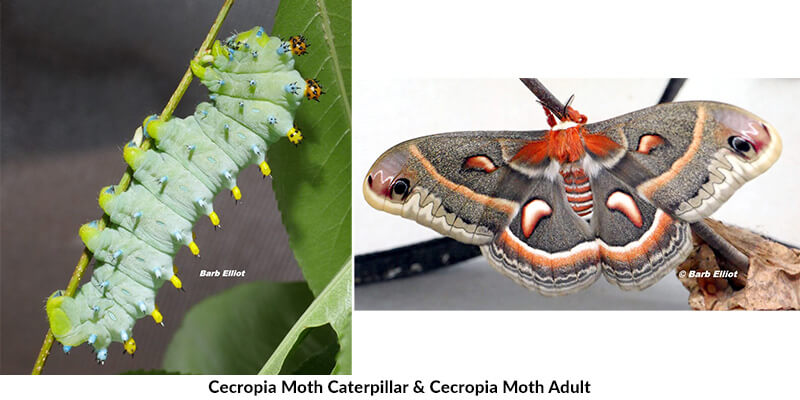
- For example, oaks are a keystone plant that hosts a higher number of butterfly and moth caterpillars than any other plant species. These caterpillars are an important food source for birds and essential as food for their young. A white oak, Quercus alba, has been planted in OMW. The host plants for the cecropia moth pictured here include oak, cherry, dogwood, and sassafras.
- A diversity of native plants offers greater biodiversity and stability in the web of life.
- The native plants in OMW support a host of pollinators. Fertilization occurs when bees, wasps, flies, ants, butterflies, moths, beetles, and other pollinators transfer pollen from one plant to another. Seeds, nuts, and berries develop and produce new plants.
- Pesticides, which kill insects indiscriminately, are not used in this project. Any plants treated with pesticides prior to purchase have been excluded. The nursery trade often uses systemic pesticides such as neonicotinoids that remain in the leaves, pollen, and nectar and kill insects for many years.
 Instead, natural predators, parasites, and parasitoids keep insects in balance.
 - To create healthy soil conditions, fallen leaves and woody debris are not removed in the fall, and mulch is added on a regular basis. Beetles, millipedes, earthworms, fungi and other organisms feed on the decaying organic matter and enrich the soil.
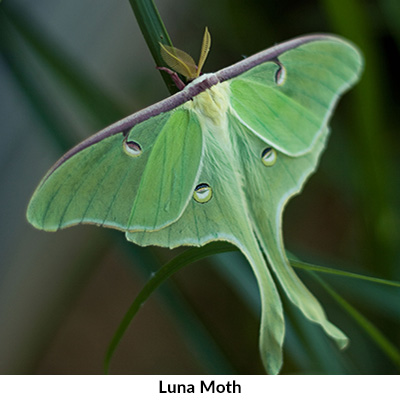
- Fireflies and many moths, butterflies, native bees, and other insects overwinter in leaf litter to complete their life cycles. To protect the leaves and these insects, the trees and shrubs in OMW are underplanted with perennial ground covers instead of turfgrass. Luna moths, for instance, survive the winter as cocoons in fallen leaves, perhaps those from OMW’S black cherry, one of its host plants. Mourning cloak butterflies will overwinter as adults in leaf litter. For more information about the function of keystone native plants and importance of groundcovers and leaf litter, click here.
- Mycorrhizal fungi live in humus-rich soil and engage in symbiotic relationships with trees, shrubs, and other plants. The fungal network communicates with the roots of the plants to share water, phosphorus, and other resources that promote plant health and growth. For more information about the health of the soil and mycorrhizal fungi, click here.
- Creatures of all kinds participate in the web of life. For example, birds eat insects that live on foliage and in bark and fallen leaves. They also consume berries, seeds, and nuts that can disperse and propagate elsewhere. Birds themselves are eaten by owls, hawks, and other predators. Vultures, crows, foxes, and insects such as maggots, beetles, and flies consume bird carcasses and recycle the nutrients.
- Foxes are another animal exemplifying the web of life. As omnivores, they eat mice and other rodents, rabbits, opossums, birds, and insects, but also consume fruits, berries, and nuts. Their predators include owls, large hawks, coyotes, and bears. As with birds, their carcasses are consumed by animals such as vultures and insects.
 Instead, natural predators, parasites, and parasitoids keep insects in balance.
 They also consume berries, seeds, and nuts that can disperse and propagate elsewhere. Birds themselves are eaten by owls, hawks, and other predators. Vultures, crows, foxes, and insects such as maggots, beetles, and flies consume bird carcasses and recycle the nutrients.
Discover Foulkeways
Learn more about Life at Foulkeways. Click on a button below to request a brochure or schedule a virtual presentation. Meet the Residents and see what Life at Foulkeways means to them and take a look at our Gallery.
Setting standards of excellence in retirement living since 1967.
© 2026 Foulkeways at Gwynedd. All Rights Reserved. |Non-Discrimination Statement | Privacy Policy Statement | Code of Conduct |Return/Dispute Policy |Meritain Health |Site Map |Created by Fitzgerald Esplin Advertising